Keep it salty, keep it cold, keep yourself in the room
The apéro — that unhurried hour before dinner when glasses are filled and nobody is yet thinking about food — is perhaps the most transportable of all French rituals. You don't need a marble counter or a cave à vins. You need three things, and only three.
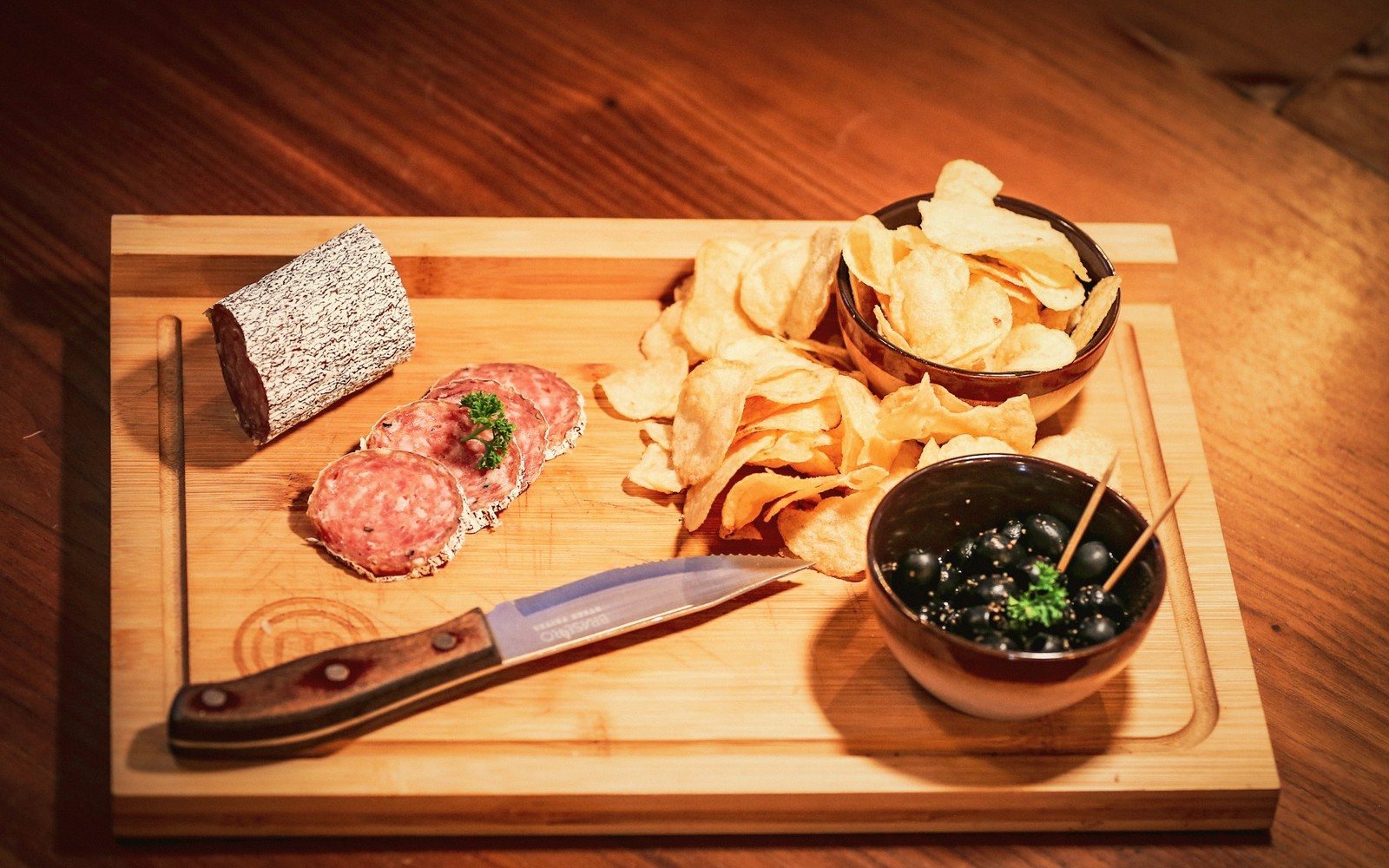
Something salty. This is non-negotiable, and it is also the good news, because salty things require almost no effort. A bowl of olives, a handful of gougères if you've baked them (they freeze beautifully, reheat in ten minutes), radishes with cold butter and fleur de sel, a wedge of aged Comté with a small knife. Chips — the good kind, ridged, unflavoured — are completely acceptable, and anyone who disagrees is overthinking it. The salt does two things: it sharpens the appetite for dinner and it makes whatever you're drinking taste better.
Chips — the good kind, ridged, unflavoured — are completely acceptable, and anyone who disagrees is overthinking it.
Something cold. This means the glasses are chilled, the wine or sparkling water has been in the fridge for at least two hours, and the ice bucket — even a salad bowl packed with ice — is actually on the table. A lukewarm kir or a tepid glass of rosé is a small sadness easily avoided. The drink itself is beside the point: a crisp white, a light red served slightly cool, a well-made lemon soda for those not drinking. The temperature is the point.
Nobody standing in the kitchen. This is the rule that people break most often, and it's the one that matters most. The apéro works because everyone is present — on the terrace, around the coffee table, in the same room — grazing and talking at the speed of conversation, not the speed of cooking. If you are disappearing to plate things, you have planned too much. Put everything out before the first guest arrives. Sit down. Refill glasses. That is the whole job.
The apéro is not a separate course that precedes dinner; it's a change of pace that makes dinner possible. Resist the urge to make it impressive. A cold bottle, a ramekin of olives, the salt in the air — that's already the thing. The French have been trusting this simplicity for a long time, and they are right.