The shoe that never went anywhere
It did not "come back." The ballet flat never left — it simply waited while the rest of fashion had its moment with the platform and the sock boot and the ugly sneaker, then stepped back into the frame as if it had never been gone. Because for a certain kind of French woman, it hadn't. The flat was always on the foot, season after season, filed under non-negotiable basics alongside the trench coat and the well-cut jean.
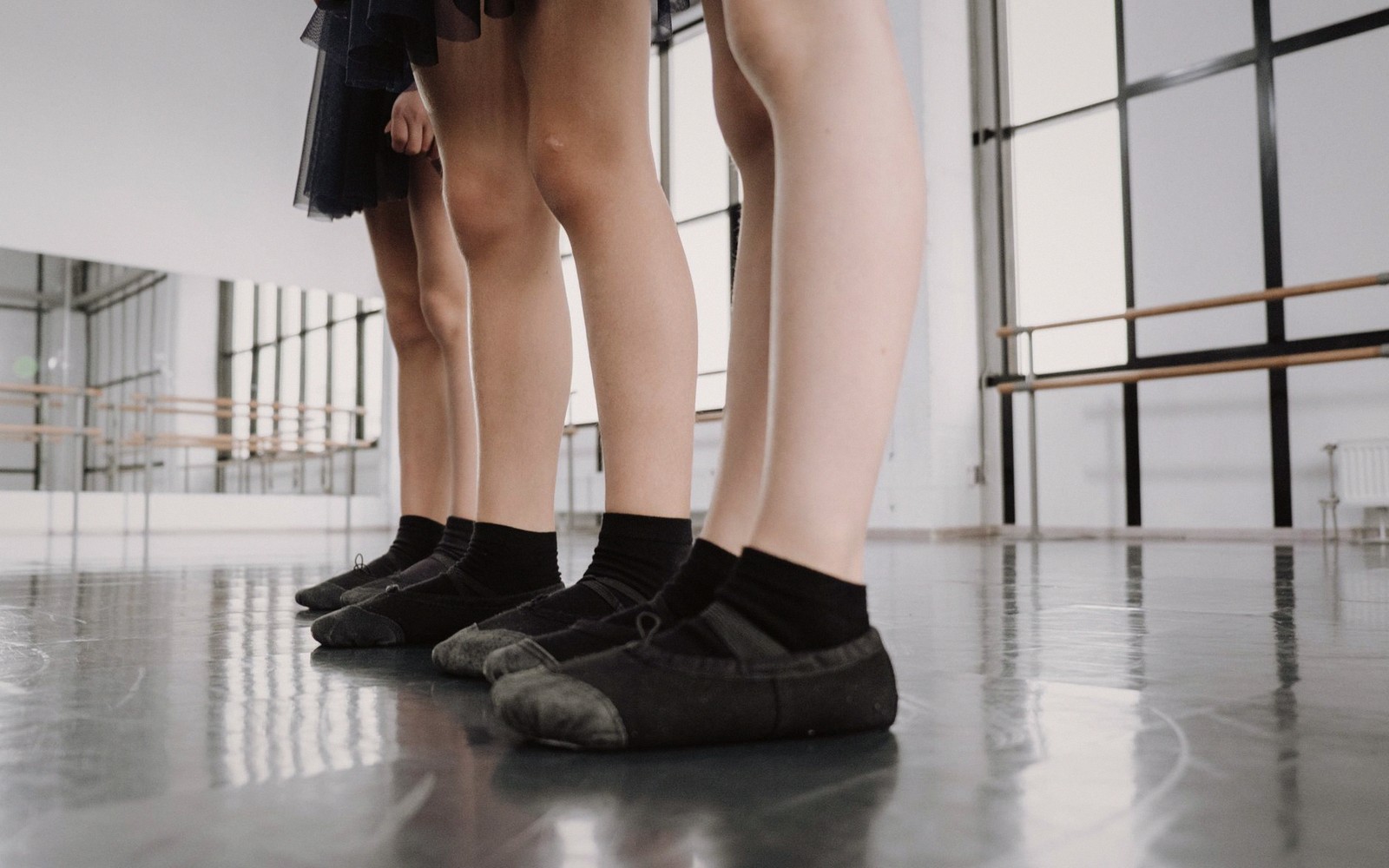
The silhouette is borrowed directly from the dance studio: a thin leather sole, a rounded toe, a simple ribbon or elastic strap across the low vamp. Repetto, the Parisian maison founded by Rose Repetto in 1947 for her son Roland Petit, is the brand most associated with the style — their Cendrillon and BB models are practically a national shorthand. But the form long predates any single label, and the principle holds whether you spend a lot or a little: flat, supple, close to the ground.
The silhouette is borrowed directly from the dance studio: a thin leather sole, a rounded toe, a simple ribbon or elastic strap across the low vamp.
What makes the ballet flat specifically French is less the shoe than the philosophy behind it. It is chosen, not settled for. There is no apology implied, no suggestion that the wearer would prefer heels but has sacrificed them for comfort. The flat is the point — paired with a wide-leg trouser, a midi skirt, a simple dress, worn in and creased and slightly dusty at the toe in a way that reads as exactly right. The French approach to building a wardrobe runs on this logic: a few things worn fully rather than many things worn halfway.
Buy leather if you can; it molds to the foot and improves with use. Stick to black, cognac, or a nude that reads close to your skin — these are the versions that work with everything and date precisely never. Then wear them out, and buy them again.