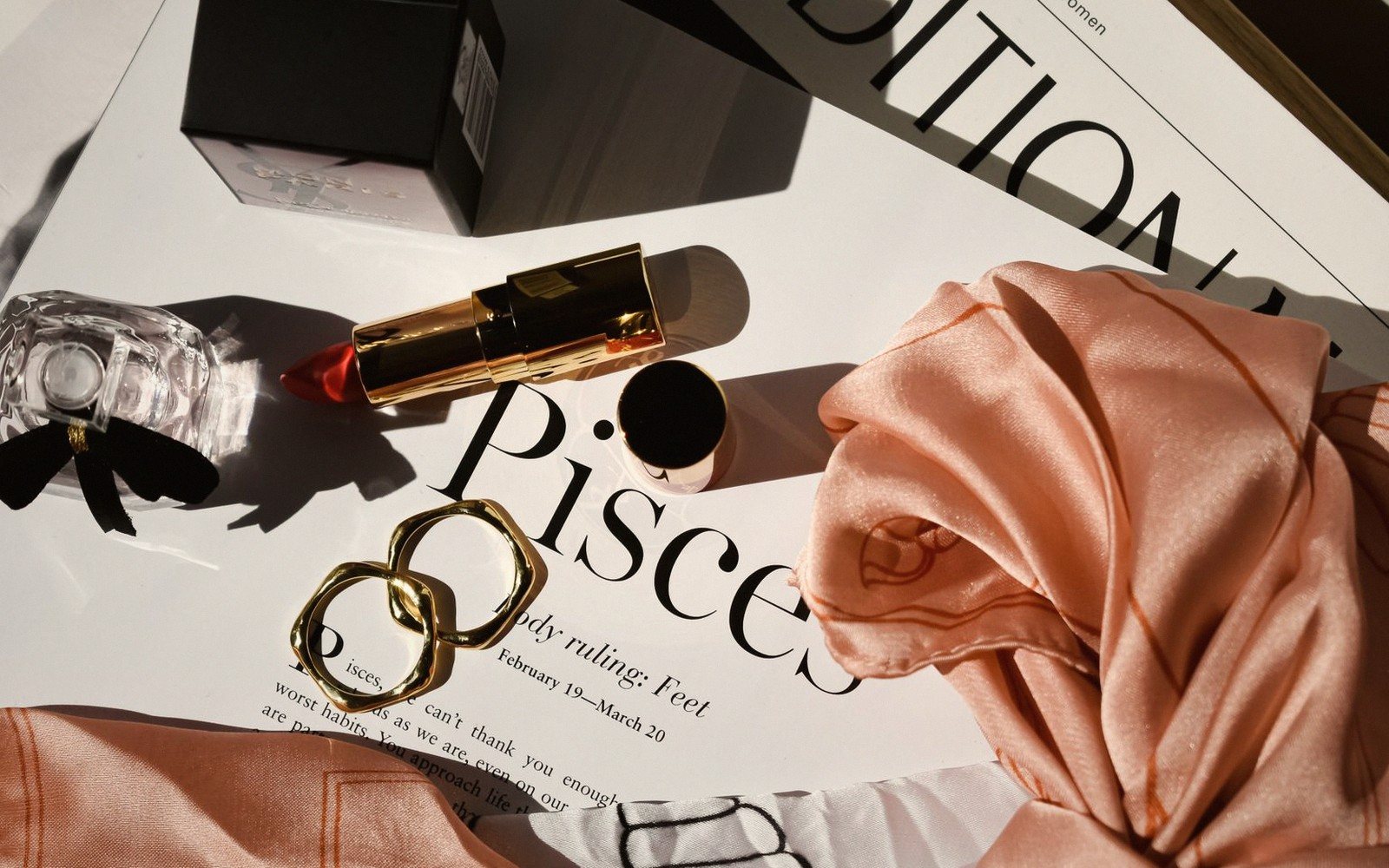
The Case for One Good Scarf
There is a reason the scarf appears in almost every photograph of a well-dressed French woman and almost none of the magazine articles telling you how to dress like one. It is not a trick. It is not a formula. It is simply the most versatile thing you can own, and once you understand that, the question of how to wear it more or less answers itself.
Start with material, because material is everything. Wool and silk are not interchangeable — they solve different problems. A fine wool or cashmere scarf (a long rectangle, generous enough to loop twice) is what carries you through October to April. It keeps you warm without bulk, and a well-chosen one — navy, camel, a soft burgundy — goes over a trench coat, a blazer, a weekend jacket, without looking like it tried. A silk carré, roughly 90 cm square in the French tradition, is a spring and summer animal: tied loosely at the neck, worn flat over a linen shirt, knotted at the wrist or looped through a bag handle. It adds colour and finish when your outfit needs neither more fabric nor more warmth.
If you own one of each, you have the accessory question largely settled. If you can only choose one, choose the wool. You will reach for it more.
How to Tie It (Without Overthinking It)
The anxiety around the scarf is almost entirely about the knot. French women, it's often said, just know how. They don't, of course — they learned, and then they stopped thinking about it, which amounts to the same thing.
For a long wool scarf, the simplest and most useful method is the Parisian loop, though nobody in Paris calls it that: fold the scarf lengthwise in half, drape it around the back of your neck, then pass the loose ends through the folded loop and pull gently. It sits close to the neck, it stays put, it looks intentional. Done in under ten seconds once you've done it a dozen times.
It sits close to the neck, it stays put, it looks intentional.
For a silk carré, the classic neck knot is a simple bias fold — bring two opposite corners together to make a triangle, fold it into a strip a few centimetres wide, drape it around your neck, and tie a loose single knot off-centre. The key word is loose. The moment it looks tight or stiff, the whole thing tips from elegant to costumed. If you're uncertain, leave more length than feels right. You can always tuck, but you cannot unfuss.
The other reliable move for a silk carré: skip the neck entirely. Tied around the handle of a leather bag, or worn as a headscarf in the simple way — folded into a wide band and knotted underneath at the nape — it does entirely different work. One scarf, three uses. That's the maths that makes it worth spending money on.
Buy It Once
A cheap scarf is a false economy in a way that a cheap T-shirt sometimes is not. A thin, scratchy wool one will not drape; a printed silk one from an unknown mill will look flat and lifeless within a season. The brands with real craft histories — Hermès for silk, obviously, but also Carven, Épice, or smaller ateliers producing limited runs — use tighter weaves and richer dyes that hold their saturation. This is visible, even from across a room.
You do not have to spend a great deal. A vintage Hermès carré from a Paris marché aux puces or a reputable resale platform costs a fraction of the boutique price and lasts indefinitely. A good cashmere rectangle from a heritage Scottish or French mill — a category worth researching once and investing in — will outlast almost everything else in your wardrobe.
The logic, as with most things worth owning, is simple: buy it once, buy it well, stop looking. A great scarf is not a seasonal purchase. It is, quietly, a permanent one — worn differently each decade, which is exactly the point.