Arrive Hungry, Eat Before You Do Anything Else
Lyon doesn't reward the sightseer who skips lunch. The city earns its reputation as the gastronomic capital of France the old-fashioned way — not through Michelin fireworks, but through the bouchon: a small, unhurried, faintly dim room where the cooking has barely changed since the mères lyonnaises ran it. These legendary women — working-class cooks who fed silk workers and eventually everyone else — shaped a cuisine built on offal, cream, lentils, and unfussy technique. The tradition is real and alive, though not every restaurant that calls itself a bouchon deserves the name. Look for the official label issued by Les Authentiques Bouchons Lyonnais, a small association that certifies the genuine article.
Sit down before you do anything else. Order the tablier de sapeur (tripe, crumbed and griddled) if you're feeling brave, or the quenelle de brochet — a cloud of pike mousse in crayfish sauce that is somehow both rich and weightless. Drink the Beaujolais; this is where it belongs. Then walk it off. There is no other order.
The Two Rivers, One Peninsula
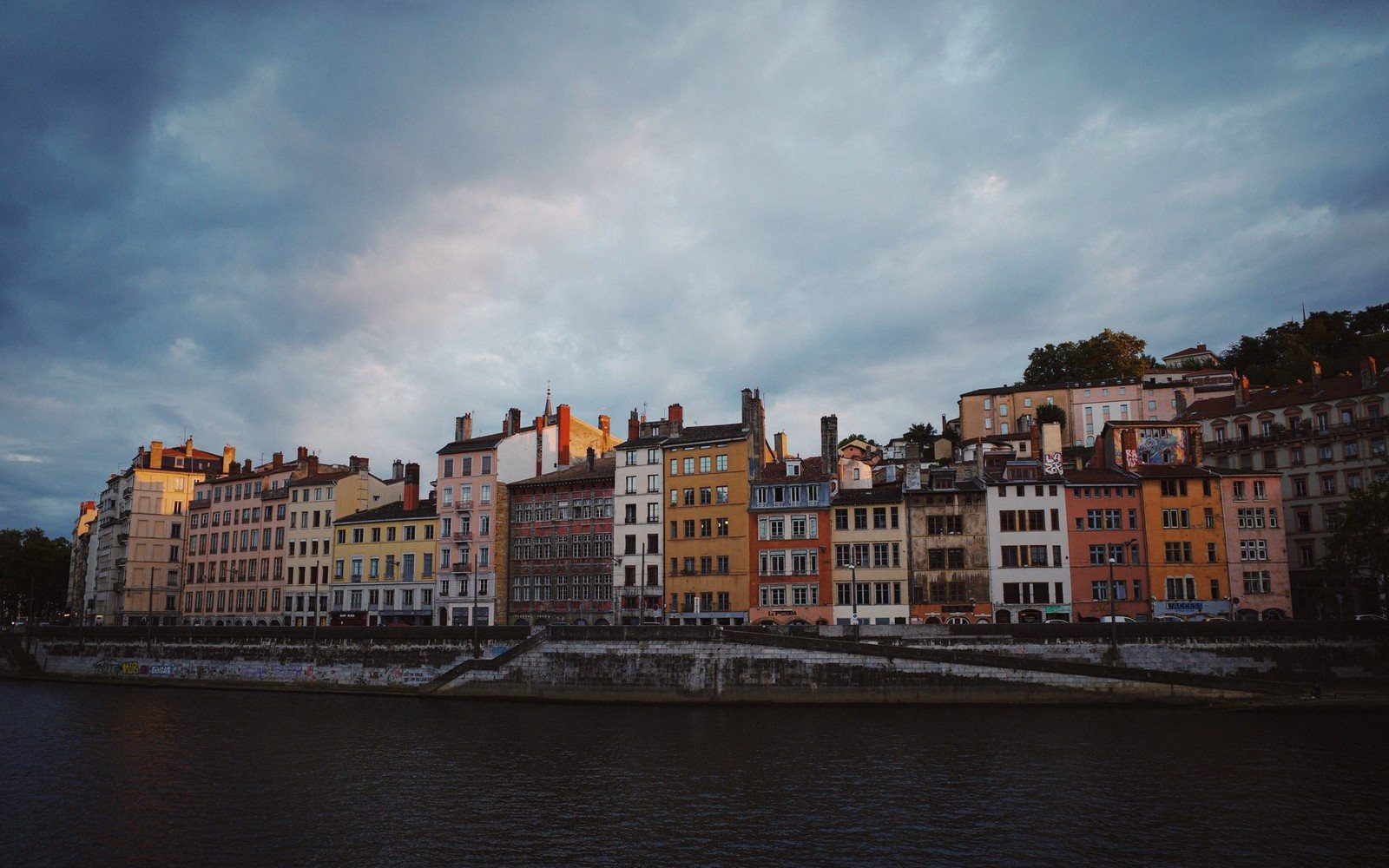
Lyon sits at the confluence of the Rhône and the Saône, and the Presqu'île — the narrow peninsula between them — is the city's true centre. Saturday morning belongs here, on foot. The Marché de la Création runs along the Saône quay in Vieux Lyon on Sunday mornings; the covered market of Les Halles de Lyon Paul Bocuse, across the Rhône in the Part-Dieu district, is the better known pilgrimage. Go on Saturday before noon, when the stalls are full. Buy a slice of saucisson, taste the Saint-Marcellin (a soft cheese from the nearby Isère, runny at room temperature and barely containing itself), accept a sliver of praline tart from whoever is offering. This is not a detour; it is the point.
The Presqu'île itself was largely rebuilt in the nineteenth century under the direction of prefect Claude-Marius Vaïsse, which is why its grand boulevards and pastel façades feel surprisingly Haussmannian — Lyon had its own version of that ambition. Walk from Bellecour toward the Hôtel de Ville, then north along the rue de la République, and resist the urge to make it efficient.
Walk from Bellecour toward the Hôtel de Ville, then north along the rue de la République, and resist the urge to make it efficient.
The Funicular, La Croix-Rousse, and the Right Kind of Tired
Sunday morning: take the Ficelle. Lyon's funicular railways — technically called ficelles, strings — climb from the city centre up to Fourvière and to La Croix-Rousse, the old silk-weaving quarter on the hill north of the Presqu'île. Take Fourvière first, before the buses arrive. The Basilica of Notre-Dame de Fourvière is all gilded ambition inside; the view over the city is the reason. Two hills, two rivers, the Alps on a clear morning. Give yourself ten minutes and mean it.
Then walk or ride down to La Croix-Rousse. The neighbourhood has its own tempo — market on the boulevard on Tuesday and Sunday mornings, café terraces that fill early, passageways called traboules threading through the old silk buildings (many are open; a local will tell you which). The traboules aren't secret exactly, but they reward curiosity over maps.
Lunch is the final argument. Find a table somewhere small, order what the blackboard suggests, and let the afternoon happen without an agenda. The long lunch is not a Lyon invention, but Lyon may defend it most sincerely — a second glass is expected, a third is survivable, and leaving early would be rude to the cook.
The train back to Paris on the TGV takes two hours. For a weekend this good, it's not enough time to prepare.